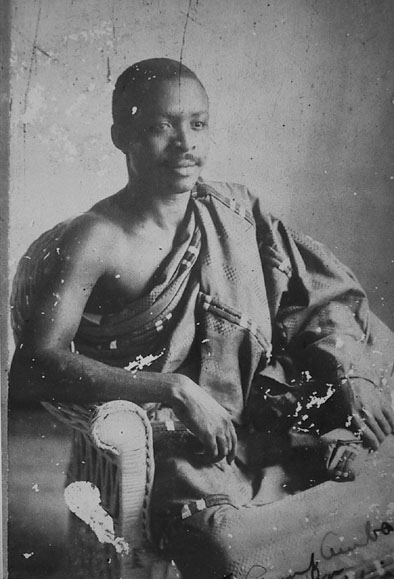
Kobina Sekyi, c. 1920s. Courtesy of Ghana National Archives.
Kobina Sekyi
Born William Esuman Gwira Sekyi
1892—1956
Ghanaian lawyer, writer, and intellectual who championed indigenous education and cultural preservation during the colonial period.
Who Was Kobina Sekyi?
William Esuman Gwira Sekyi, known as Kobina Sekyi (1892-1956), was a pioneering Ghanaian intellectual whose work bridged traditional African knowledge systems and modern Western education. Born in Cape Coast during the height of British colonial rule, Sekyi emerged as one of the Gold Coast's most influential legal minds and cultural theorists.
His contributions to African intellectual discourse, particularly in education and cultural preservation, established him as a foundational figure in Ghana's pre-independence intellectual movement. Through his legal practice, writings, and advocacy, Sekyi challenged colonial educational policies while promoting a synthesis of indigenous and Western knowledge systems.
Biographical Timeline
Early Life and Education
Born in Cape Coast, Gold Coast, into a prominent Fante family. His father, John Gladstone Sackey, was a headmaster of Mfantsipim School, and his mother, Wilhemina Sackey (nee Pietersen), came from an influential local family. Sekyi received his early education at the Methodist Boys' High School in Cape Coast.
In 1918, he graduated from University College London (a member institution of the University of London) with a M.A. in Philosophy. He was also called to the English Bar (Inner Temple) in 1918.

Cape Coast during Sekyi's youth, showing the colonial architecture.

Sekyi in his legal chambers, c. 1925.
Legal Practice and Advocacy
Established a successful legal practice in Cape Coast, specializing in land rights and customary law. Sekyi became known for his defense of traditional chiefs and his advocacy for the recognition of customary law within the colonial legal system.
His legal work often intersected with his cultural advocacy, as he argued for the preservation of traditional Ghanaian institutions and practices within the framework of colonial governance.
Literary and Intellectual Work
Published influential essays, lectures and newspaper columns on African education, culture, and politics. His work "The Blinkards" (1915) was one of the earliest African plays written in English, satirizing the colonial mentality among educated Africans.
Sekyi's writings challenged the colonial narrative and promoted the value of indigenous knowledge systems, arguing for educational reforms that would honor African traditions while embracing beneficial aspects of Western learning.

Original manuscript of "The Blinkards," 1915.
Legacy and Impact
Kobina Sekyi's intellectual legacy extends beyond his lifetime, influencing generations of Ghanaian scholars, educators, and cultural advocates.
Contemporary scholars recognize Sekyi as a pioneer of African intellectual discourse, whose work anticipated many themes that would later emerge in post-colonial studies and African philosophy. His advocacy for cultural preservation while embracing beneficial aspects of modernity remains relevant to contemporary debates about development and identity in Africa.